Table of Contents
-
Introduction
-
What Is Rainwater Harvesting for Industrial Facilities?
-
Why Industries Need Rainwater Harvesting Today
-
Key Benefits of Rainwater Harvesting for Industrial Facilities
-
4.1 Reduce Water Bills for Industrial Units
-
4.2 Improve Water Security for Manufacturing
-
4.3 Optimize Industrial Water Demand Management
-
4.4 Non-Potable Applications: Process Water, Cooling Towers & More
-
4.5 Stormwater Management for Industrial Sites
-
4.6 Support Green Building Certifications
-
4.7 Strengthen Sustainability, CSR & ESG Water Metrics
-
-
How Lotus Enviro Systems Private Limited Delivers Efficient RWH Systems
-
Conclusion
1. Introduction
Industrial facilities across India face increasing challenges such as rising water tariffs, water scarcity, strict environmental compliance, and growing expectations for sustainable operations.
As a result, rainwater harvesting for industrial facilities has emerged as one of the most practical, cost-effective, and environmentally responsible solutions.
At Lotus Enviro Systems Private Limited, we design and implement advanced commercial rainwater harvesting systems that help industries reduce water dependency, lower operational costs, improve sustainability scores, and achieve long-term water conservation for industry.
2. What Is Rainwater Harvesting for Industrial Facilities?
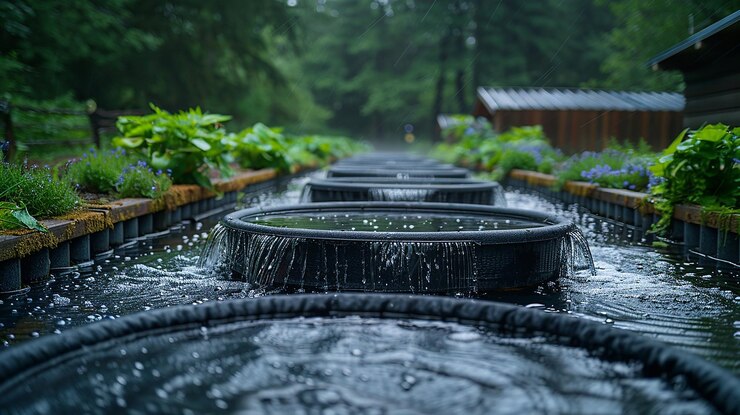
Rainwater harvesting refers to the process of collecting, storing, filtering, and reusing rainwater for various industrial applications. A rainwater collection system for factories typically involves rooftop collection, stormwater capture, filtration units, storage tanks, and recharge structures.
For industries that rely heavily on water, an efficient RWH system is a critical component of sustainable water management in industrial settings.
3. Why Industries Need Rainwater Harvesting Today
Growing water scarcity and unpredictable supply make industries vulnerable. Many manufacturing zones face groundwater depletion and municipal water shortages, increasing operational risks.
Industrial rainwater harvesting benefits include:
-
Reliable water availability year-round
-
Lower dependency on tankers and borewells
-
Reduced risk of production downtime
-
Enhanced compliance with environmental regulations
-
Improved sustainability and ESG performance
By integrating a well-designed system, industries can meet both operational and environmental goals.
4. Key Benefits of Rainwater Harvesting for Industrial Facilities
4.1 Reduce Water Bills for Industrial Units
One of the most direct advantages is reducing water bills for industrial facilities. Rainwater is free, and using it for non-potable processes significantly lowers expenses associated with:
-
Borewell electricity usage
-
Tanker water purchases
-
Municipal water charges
Over time, industries achieve substantial savings through smart industrial water demand management.
4.2 Improve Water Security for Manufacturing
Water availability is crucial for seamless manufacturing operations. Rainwater harvesting enhances water security for manufacturing by providing an additional supply that reduces dependency on external water sources.
This ensures continuous operations during:
-
Summer months
-
Water restrictions
-
Borewell failures
-
Drought conditions
For factories that operate 24/7, maintaining uninterrupted water supply is essential.
4.3 Optimize Industrial Water Demand Management
Rainwater can be integrated into your facility’s existing water network to balance and optimize supply.
This helps industries:
-
Reduce pressure on groundwater
-
Maintain stable water levels in storage tanks
-
Achieve efficient water efficiency in industrial systems
-
Improve overall manufacturing process efficiency
Smart water demand planning supports long-term sustainability and operational reliability.
4.4 Non-Potable Applications: Process Water, Cooling Towers & More
Rainwater is naturally soft and suitable for many industrial applications after basic treatment.
Key non-potable water uses for industrial facilities include:
-
Process water supply using rainwater
-
Cooling tower makeup water using rainwater
-
Boiler feed water (after appropriate treatment)
-
Fire fighting water for industrial premises
-
Floor washing, equipment washing & landscaping
Using harvested rainwater for these applications reduces costs and extends equipment life by lowering chemical usage.
4.5 Stormwater Management for Industrial Sites
Heavy rains can cause flooding, structural damage, and downtime for factories.
A well-engineered system contributes to effective stormwater management for industrial facilities, ensuring:
-
Controlled runoff
-
Reduced soil erosion
-
Prevention of waterlogging
-
Safety for workers and equipment
At Lotus Enviro, our systems integrate stormwater planning with rainwater harvesting to safeguard your premises.
4.6 Support Green Building Certifications
Industries implementing RWH gain advantages in green building certification for industrial water systems, such as:
-
LEED points
-
GRIHA certification
-
IGBC green factory rating
Rainwater reuse, groundwater recharge, and efficient water management are key criteria for earning sustainability credits.
4.7 Strengthen Sustainability, CSR & ESG Water Metrics
Industrial sustainability is a major priority for modern businesses. Rainwater harvesting enhances:
-
Corporate social responsibility (CSR) water initiatives
-
Environmental, social, and governance (ESG) water metrics
-
Manufacturing efficiency related to water use
-
Reduced carbon footprint related to water transport and pumping
Adopting RWH demonstrates leadership in responsible resource management.
5. How Lotus Enviro Systems Private Limited Delivers Efficient Rainwater Harvesting Solutions
At Lotus Enviro Systems Pvt. Ltd., we specialize in delivering end-to-end rainwater harvesting solutions customized for industrial needs.
Our services include:
✔ Detailed site survey & water requirement study
✔ Design of rooftop & surface runoff collection systems
✔ Stormwater management planning
✔ Recharge well and storage tank design
✔ Filtration systems for process and cooling tower water
✔ Integration with fire-fighting and utility networks
✔ Complete installation & commissioning
✔ Post-implementation maintenance & monitoring
Our engineering expertise ensures your system is:
-
Efficient
-
Durable
-
Compliance-ready
-
Low maintenance
-
Optimized for industrial usage
As a trusted partner for industrial environmental solutions, we help businesses achieve both cost-saving and sustainability goals.
6. Conclusion
Rainwater harvesting is no longer just a sustainability initiative—it is a strategic necessity for industries. By implementing a robust rainwater harvesting system for industrial facilities, companies can reduce water costs, improve operational resilience, manage stormwater efficiently, and strengthen their sustainability profile.
With decades of experience, Lotus Enviro Systems Private Limited helps industries adopt reliable, compliant, and efficient systems tailored to their specific needs.
A well-designed rainwater system is an investment that delivers long-term value—economically, environmentally, and operationally.